
Roof maintenance starts with knowing which system is on the building and keeping a record of changes. For homes and businesses in Volusia County, heavy rain and storm debris make roof drainage and post-storm observations useful parts of that record.
There is no single maintenance treatment that suits every roof. Follow the product manufacturer's instructions and have a qualified roofer assess conditions that require roof access.
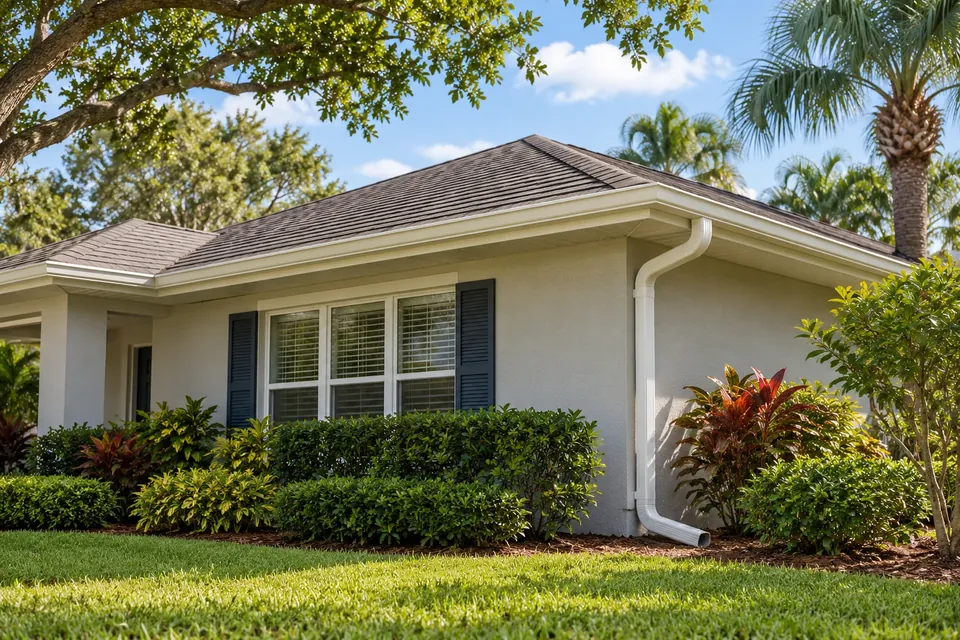
Make a safe ground-level check
Look for loose material, new gaps, debris and changes along the roof edge. Watch for gutter overflow from a sheltered, safe position during rain. Inside, note new ceiling stains or dripping. Photograph changes and record the date and weather, without climbing onto the roof or entering a hazardous attic.
Match the questions to the roof covering
- Shingle roofs: ask about missing or lifted shingles, damaged flashing and changes in granule coverage. Color changes alone do not establish a leak.
- Tile roofs: report broken or displaced tiles. The inspection should also consider relevant flashing and concealed-layer limitations.
- Metal roofs: ask about panel connections, exposed fasteners where present, finish condition and compatible repair materials.
- Low-slope roofs: keep attention on drainage, seams, penetrations and damage associated with service traffic. Do not puncture or scrape the membrane to investigate.
Keep drainage and nearby vegetation in the plan
Arrange safe removal of accumulated debris and have blocked or damaged drainage investigated. Keep branches from rubbing on the roof, using a qualified tree professional where pruning involves height, heavy limbs or utility lines. Roof maintenance should not involve walking on an uncertain surface to reach a branch.
Where gutters repeatedly overflow or detach, assess the cause before replacing parts. Gutter options should fit the roof drainage and the condition of the supporting fascia.
Do not apply a universal roof treatment
Coatings, cleaning products and sealants must be compatible with the actual roof system. A product marketed as a roof rejuvenator is not automatically appropriate for asphalt shingles. Ask the manufacturer before authorizing an unfamiliar treatment, and retain the written advice.
Keep a maintenance record and an inspection plan
Save installation documents, warranty terms, inspection photographs and repair invoices. Ask about an inspection schedule based on the roof's condition, product requirements and exposure, with additional checks after a storm or a new leak. A roof inspection can turn an observation into a specific repair or monitoring plan; a generic lifespan chart cannot do that for your building.