
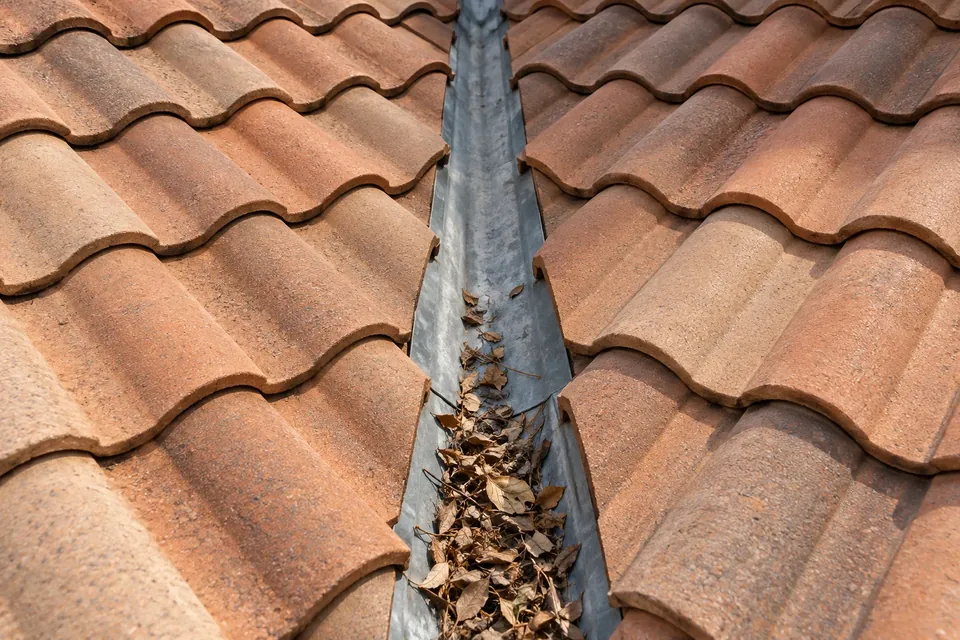
A tile roof can look sound from the street while leaves collect in the channels where two slopes meet. Those channels are valleys. Their job is to carry runoff downslope, and a persistent pile of debris deserves attention even when the surrounding tiles look intact.
If you are seeking roofing help in Ormond Beach for a shaded home with recurring leaf buildup, describe the affected valley when you request a roof inspection. That gives the roofer a specific drainage concern to examine, rather than a general request to make the tiles look cleaner.
Why the valley matters
Water from adjoining roof planes converges at the valley. Leaves and small branches can obstruct that route. Westlake Royal's valley-metal installation guide calls for removing obstructions that could dam water and damage the roof system. The maintenance need depends on how much debris collects.
An open valley shows a strip of metal between the tile edges. In a closed valley, the tiles meet closer to the center, so less of the drainage path is visible. A clean-looking line from the ground does not prove that every concealed portion is clear. Neither style can be diagnosed from a distant photograph alone.
What you can observe without climbing
From a safe position on the ground, note where the debris repeatedly settles and whether a nearby branch reaches over that part of the roof. Take a zoomed photograph if the area is visible. After rain, note any new indoor stain, unusual runoff or overflowing gutter below that roof section. Do not stand outside during lightning to watch the drainage.
Keep earlier photographs. A pile that returns to the same place provides useful information for the inspection. Avoid assigning a cause to a ceiling stain simply because a valley is nearby; water can travel before it becomes visible indoors.
Ask what the inspection can actually see
A useful report separates visible findings from areas that require further access. Ask the roofer to explain:
- Where the obstruction sits and whether it reaches beneath tile edges.
- Whether adjacent tiles are cracked, displaced or otherwise damaged.
- Whether visible valley metal or its outlet shows a problem beyond loose debris.
- Whether additional investigation is needed before proposing a repair.
Before anyone moves tiles, agree on the scope and how any damaged pieces will be handled. Our tile roofing page is the relevant service reference when the assessment points to tile-system work. Gutter cleaning alone does not establish the condition of the valley higher up the roof.
Clearing leaves and repairing a roof are different jobs
Debris removal may address a drainage obstruction, but it cannot repair damaged flashing or worn underlying materials. Ask for before-and-after photographs and a separate explanation of any recommended repairs. If there is an active leak, report it when booking rather than waiting for a routine maintenance appointment.
Leave roof access to a suitably qualified professional. Tile can be damaged by foot traffic, and an apparently simple leaf pile can sit in an awkward place to reach. Once the condition is understood, agree on a follow-up interval based on this roof's tree exposure and findings. A shaded valley that repeatedly collects debris may need attention sooner than an open, unobstructed roof.