
Water near a skylight does not always arrive through a hole in the roof. Moist indoor air can condense on a cooler surface, while damaged roofing or skylight details can also admit rain. Those possibilities call for different responses, and a photograph of a drip rarely settles the question.
For an Ormond Beach home with recurring moisture, describe the pattern when booking a roof inspection: where the water appears, when you first notice it and whether it follows rain. Ask the inspector to distinguish observed findings from a suspected cause before proposing work.
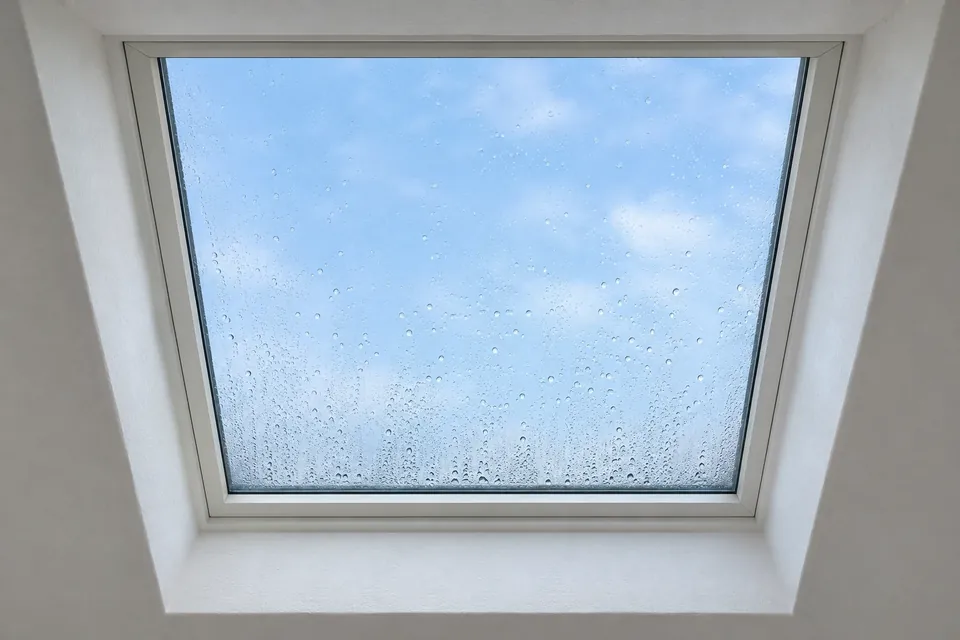
Notice where the moisture starts
From a safe position indoors, look at whether droplets appear on the room-facing glass, along the frame or on the surrounding ceiling. Note whether nearby windows also show moisture. Do not use a ladder to touch a high skylight or enter an attic just to collect a closer photograph.
VELUX's explanation of skylight condensation describes how moisture in indoor air can collect on a cool surface. Cooking and showering are among the activities that add moisture indoors. That mechanism is a possibility to investigate; it does not prove your particular skylight is watertight.
Keep a short observation log
A few dated observations can be more useful than an uncertain recollection that it happens all the time. Photograph the same area from the same safe position so changes are easier to compare. Include the surrounding ceiling in one photograph and the visible wet area in another.
- Was it raining, recently raining or dry when you noticed the water?
- Did moisture appear after cooking or a shower?
- Is it on the glass surface, at a frame corner or farther down the ceiling?
- Is there a new stain, peeling finish or a change from earlier photographs?
If you already have an indoor humidity reading, record it with the time and room. One reading does not establish the cause, and there is no need to buy equipment before reporting active water entry. Do not wait for a long log if the ceiling is getting wetter.
Ask what was actually inspected
Have the roofer explain whether the visible roofing, flashing and transitions around the skylight were assessed, and whether concealed areas need further investigation. If the unit itself needs manufacturer-specific evaluation, ask how that will be coordinated. An inspection should not label the problem condensation simply because the exterior looks intact from a distance.
Our guide to roof-flashing inspections explains why the details around an opening matter. It is also possible for water to travel before it appears indoors, so the stain's location is a starting point rather than proof of the entry point.
Match the response to the finding
If indoor condensation is supported by the evidence, ask which moisture sources or ventilation conditions need attention. Use existing kitchen and bathroom exhaust fans as intended, and have persistent indoor moisture assessed by an appropriate professional. Avoid treating a general recommendation to open windows as a year-round solution for humid Florida weather.
If rain entry is confirmed, request the repair location, scope and follow-up plan in writing. Stay clear of sagging ceilings or wet electrical fixtures. Do not apply a surface patch yourself or paint over the evidence before the cause is understood. A useful diagnosis explains both what was found and why the proposed work addresses it.