
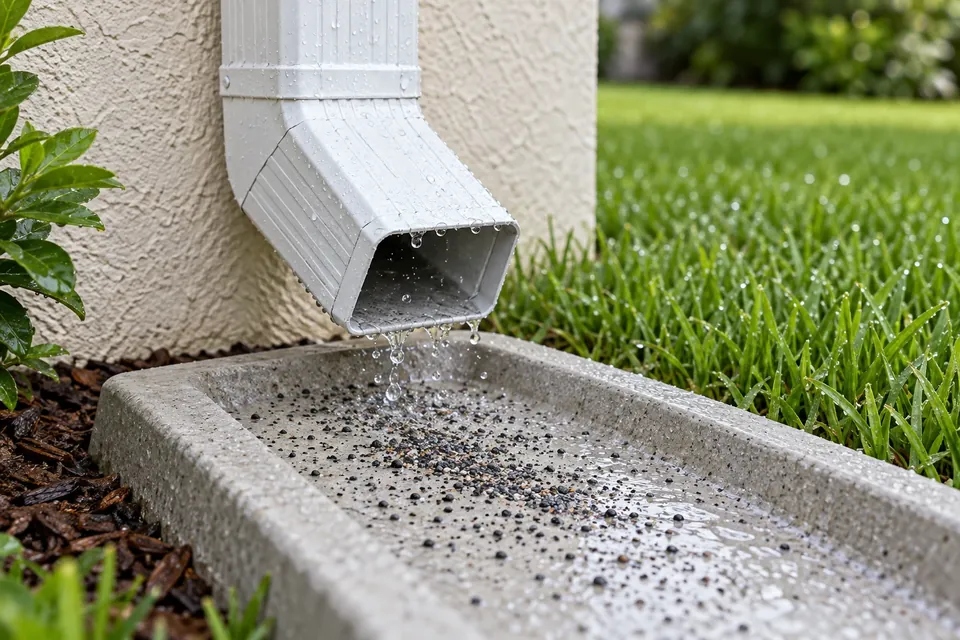
A sprinkle of dark grit below a downspout can be unsettling when you have just paid for a new roof. On a newly installed asphalt roof, some loose granules can wash away without indicating failure. The useful question is whether the shedding is easing and whether the shingles themselves show damage.
For homeowners arranging follow-up care in Palm Coast and Flagler Beach, keep the installation date and photographs together. If the amount concerns you, a roof inspection can compare the runoff with the actual shingle surfaces instead of judging the roof from a handful of grit.
Why new shingles can shed loose grains
Shingles have mineral granules embedded in their surface, and extra loose material can remain after manufacturing and installation. GAF's bulletin on granule loss in new shingles explains that this early shedding usually decreases. It advises contacting its warranty department if significant loss persists after several months, the roof changes color from granule loss, or other damage appears.
That guidance is about new GAF shingles. Ask for the instructions for your own product rather than applying a fixed waiting period to every roof. A leak or visibly damaged area deserves prompt attention regardless of the installation date.
Make a record that helps the roofer
Take a photograph from the ground of the downspout outlet and surrounding surface. Note the date, recent rainfall, and whether this is the first time the area has been checked since installation. A gutter may contain material accumulated over several storms, so one pile does not show how quickly the roof is shedding now.
- Keep the shingle manufacturer, product name, invoice and warranty paperwork together.
- Record which downspout produced the material; different outlets drain different roof sections.
- Photograph any visible change in roof appearance from a safe ground-level position.
- Tell the roofer about recent tree work, storm debris or other activity on the roof.
Do not scrape a shingle to test it, walk the roof for a closer photograph, or pressure-wash the grains away. Those actions can create damage and make the original condition harder to evaluate.
What makes the finding more concerning?
Ask for a closer assessment if shedding stays heavy, a roof section develops a distinctly bare appearance, or grit appears alongside broken shingles, new stains indoors or storm damage. There is no dependable homeowner rule that a certain number of spoonfuls means replacement. Roof age, the pattern on the roof, the material and the history all matter.
For an older roof, the question is different from routine post-installation shedding. Our guide to shingle deterioration covers broader signs of wear. The shingle roofing service page explains the roofing system itself if you are comparing repair and replacement options.
Ask for a finding, not just a verdict
A useful follow-up identifies the affected roof section, includes photographs, and explains whether the observation calls for monitoring, a repair proposal or manufacturer review. If monitoring is recommended, ask when to check again and what change should trigger an earlier call. Keep that written response with your roof records.