
The television service may be long gone while its dish is still on the roof. Before arranging removal, include a roof inspection of the attachment area in the plan. Taking equipment away and leaving a sound roof are separate parts of the job.
If you are coordinating work at a home in R&K’s Ormond Beach service area, send a ground-level photo and explain whether the dish is still used. Also mention any ceiling stains, loose equipment or previous work near the mount. Those details help identify who needs to attend and what needs assessment.
Confirm what is being removed
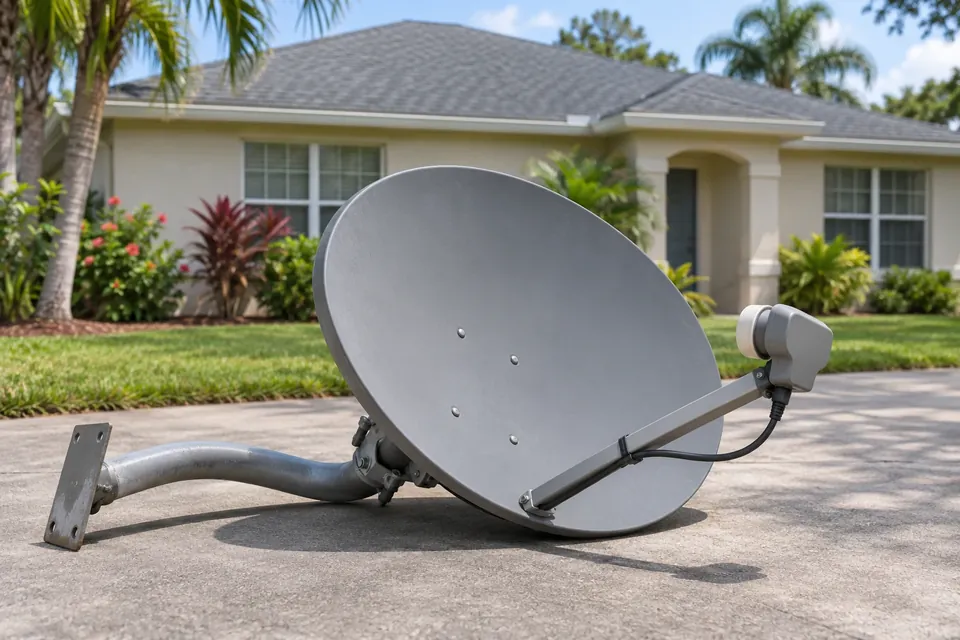
Check with the service provider or equipment owner before anyone disconnects it. An apparently unused dish may still serve another receiver or belong to someone else. Clarify what happens to the dish, mast, mounting plate and cable; “dish removal” does not necessarily mean every attachment disappears.
If the service remains active, coordinate the satellite technician and roofer before the appointment. Roofing-products manufacturer Marco Industries explains why dish reinstallation needs care, including proper signal alignment. A working picture on a clear day is not a substitute for the provider’s setup checks.
Put responsibility for the roof in writing
Ask who assesses the roof before removal, who repairs the attachment area and whether those tasks are included in the quote. The equipment remover and roofing contractor may have different responsibilities. Agree on the sequence so a roof opening is not left waiting for a second appointment.
A remaining bracket is not automatically proof of poor work, and removing a bracket is not automatically a complete repair. The roof material, attachment condition and planned scope matter. Ask the roofer to explain what will stay, why it will stay and how the area will be maintained. Avoid accepting an unexplained promise to “seal it up.”
Give the roofer the history, not a diagnosis
Tell the contractor if the dish moved during wind, if a stain developed below the general area, or if someone previously applied sealant. The stain location alone cannot establish where water entered. Photograph visible indoor changes from a safe position and note the dates.
For a shingle roof, the assessment may include the surrounding shingles and concealed materials where access is needed. Tile and metal assemblies need their own compatible repair approach. Do not ask a handyman to copy a repair seen on a different roof type or assume a surface coating resolves concealed damage.
Keep the homeowner’s part on the ground
Do not climb onto the roof, pull the mast or cut unfamiliar cables. DISH’s own troubleshooting guidance tells customers not to use a ladder or go onto the roof when investigating dish problems. If equipment is visibly loose, keep people away from the area below and contact the appropriate professional.
At completion, request before-and-after photographs and a description of the roof work, including any retained attachment. Save those with the invoice. If roof replacement is already planned, raise the unused dish during estimating so its removal and the treatment of its former location are included from the outset.