
A roof concern is harder to handle when you are hundreds of miles away and nobody knows who has the key. Before an extended absence, arrange any needed roof inspection and decide who can report changes while the home is unoccupied.
For owners coordinating care in R&K’s Flagler County service area, a short written contact plan is more useful than asking a neighbor to “keep an eye on things.” Include the property address, a reachable decision-maker and safe access arrangements. Confirm appointment availability rather than assuming a roofing company provides an ongoing home-watch service.
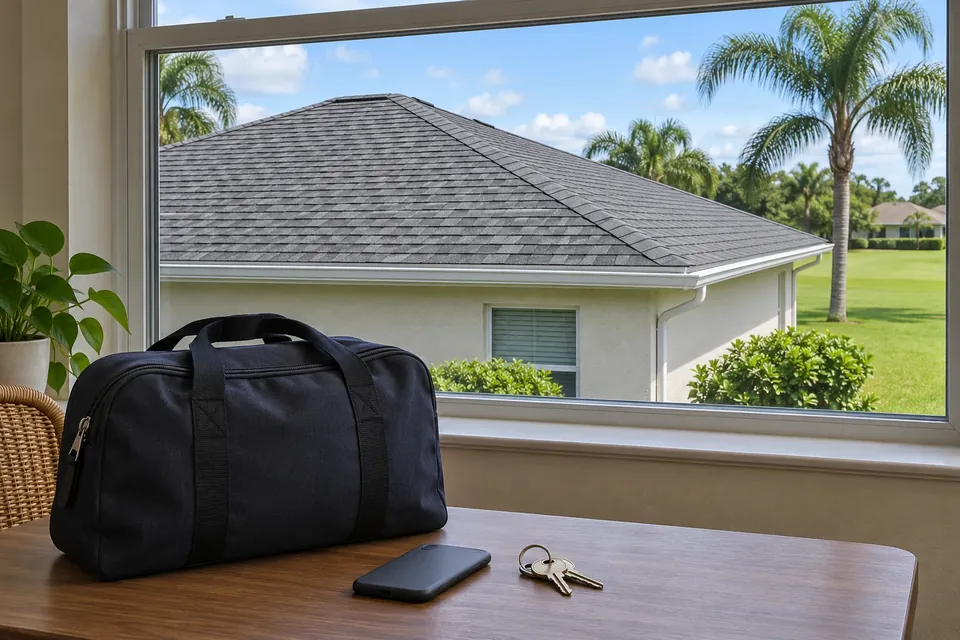
Leave a clear starting record
Save dated ground-level exterior photos and indoor photos of any existing ceiling marks. Keep prior inspection reports, repair invoices and warranty contacts in the same folder. Identify the room and position of each mark; a close-up with no location can be hard to interpret later.
The purpose is comparison, not self-diagnosis. An old stain may look alarming to someone seeing it for the first time, while a small new change may otherwise be missed. Ask the person checking the house to report what changed and when, without guessing whether the roof, plumbing or another source caused it.
Separate house checks from roof inspections
A trusted local contact can look from the ground and check accessible indoor rooms. That does not replace a professional roof inspection. They should not climb a ladder, walk on the roof, enter unsafe attic spaces or move loose roofing materials to take a closer photograph.
The Hanover’s seasonal-home guidance includes checking roof condition when closing a home and looking for damage before returning. Apply that planning principle to your Florida property; cold-weather shutdown instructions for other regions are not a substitute for a local home-care plan.
Decide how a concern reaches you
- Contact: Give your local contact your preferred number and a backup decision-maker if you cannot be reached.
- Access: Agree on how an authorized contractor can enter the property and which areas need access. Share codes privately, not in public messages.
- Evidence: Request a wide photo showing the location, a closer photo where safe, and the date of the observation.
- Approval: State who may approve work and how the written scope will reach you. A scheduled inspection is not permission for every proposed repair.
If storm damage is suspected, ask about storm-damage assessment and repair rather than requesting an automatic roof replacement. Describe the observed problem and let the inspection establish the next step. Active dripping, a changing ceiling or loose exterior material deserves prompt professional attention, not a wait until your next visit.
Close the loop before your return
After work, request photographs, the completed scope and any follow-up recommendation. Tell your local contact what was repaired so the next visit checks the right location. Keep the original report as well as the completion record; replacing one with the other loses useful history.
Before traveling back, confirm whether any appointment, access issue or repair remains open. A remote camera may show part of the property, but it cannot document every roof surface or indoor room. A named person, a clear reporting route and accessible records make it easier to act on an actual problem without guessing from afar.