
A forecast can change between booking a roof replacement and the morning work begins. The important conversation is how the contractor will protect the home at each stage, including what happens if rain arrives before the new roof is finished.
When planning roof replacement at a Daytona Beach home, ask for the weather plan before tear-off starts. A clear plan should identify the person making the start-or-delay decision, how exposed areas will be protected, and how you will receive updates if the schedule changes.
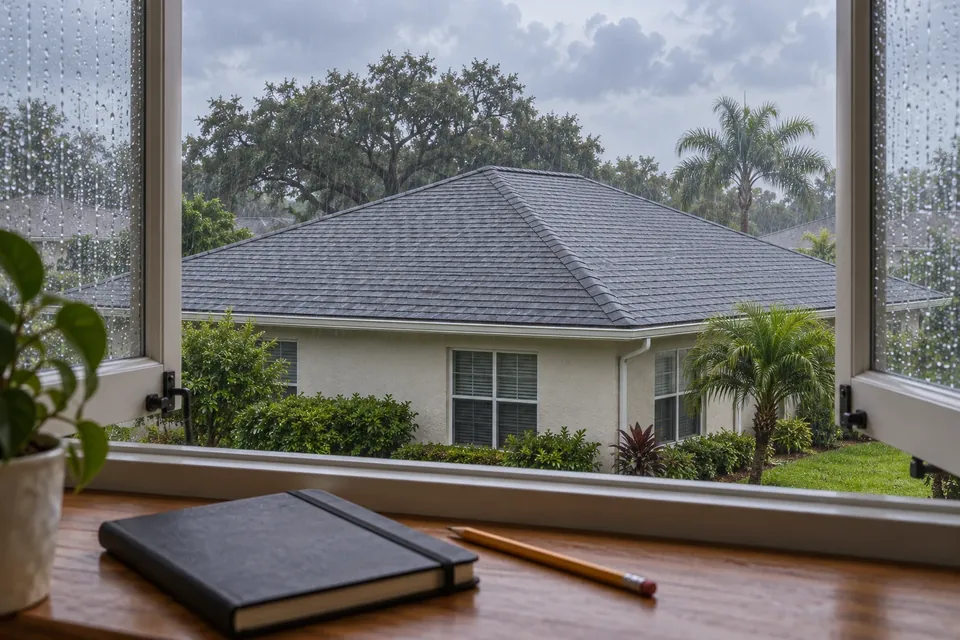
Ask about the day's stopping point
The amount of roofing removed should fit the crew's ability to protect the opened area. Ask what condition the roof will be left in at the end of the day, especially if the job spans several days. Materials on site and a favorable morning forecast do not, by themselves, explain the protection plan.
- Who checks the forecast and decides whether to begin removing roofing?
- What work must be completed before the crew leaves an opened section?
- What temporary protection is available if weather changes unexpectedly?
- Who is your contact after hours if you notice water inside?
Keep these answers with the written scope. If a delay affects deliveries, driveway access or the next day's work, ask for an updated schedule instead of assuming the original dates still apply.
What does “dried in” mean?
Contractors commonly use “dry-in” to describe an intermediate stage when protective roofing layers and details have been installed before the finished covering. Ask your contractor to describe exactly what has been completed on your house. The term alone does not establish that every penetration, edge and transition is protected.
Underlayment products have different installation and exposure requirements. A product's permitted exposure time is not a promise that an unfinished roof will withstand any storm. Request the product name, the applicable instructions and an explanation of how the installed details meet them. Photographs of the work can help document what will later be covered.
If exposed decking gets wet
GAF's roof-decking guidance explains that rain-soaked wood can take on moisture or swell and needs to dry fully. If rain reaches exposed wood, ask how the contractor will assess its condition and readiness before covering it. There is no universal number of waiting hours that fits every material and weather condition.
Wet decking does not automatically mean every sheet needs replacement. Ask for documented findings, any proposed corrective work and the reason for it. Our guide to decking decisions during reroofing explains the separate question of when damaged wood needs replacement.
If you see water indoors
Contact the project supervisor promptly and report the room, time and visible location. Photograph the area from a safe position. Stay away from sagging ceilings and wet electrical fixtures; do not enter an attic or climb onto the roof to investigate during a storm. Ask for both the immediate response and a written account of the follow-up assessment.
A delay should come with an explanation
Postponing tear-off can be a reasonable decision when protection cannot be completed safely. Ask when the next decision will be made and what conditions the crew needs to resume. This conversation is more useful than a blanket promise that weather will never interrupt the job, and it gives you a practical way to track the work through completion.