
A rooftop air-conditioning visit involves more than the equipment being serviced. People, tools and removed parts all pass across the roof. For a property in Ormond Beach, a short access plan can make the responsibilities of the equipment contractor and roofing contractor clear before work starts.
If the building has a flat or low-slope roof, keep the roof-system records available to both trades. Identify the membrane, any existing maintenance instructions and the contact for roofing concerns. R&K's role is roofing assessment and work; HVAC servicing belongs with the appropriate equipment provider.
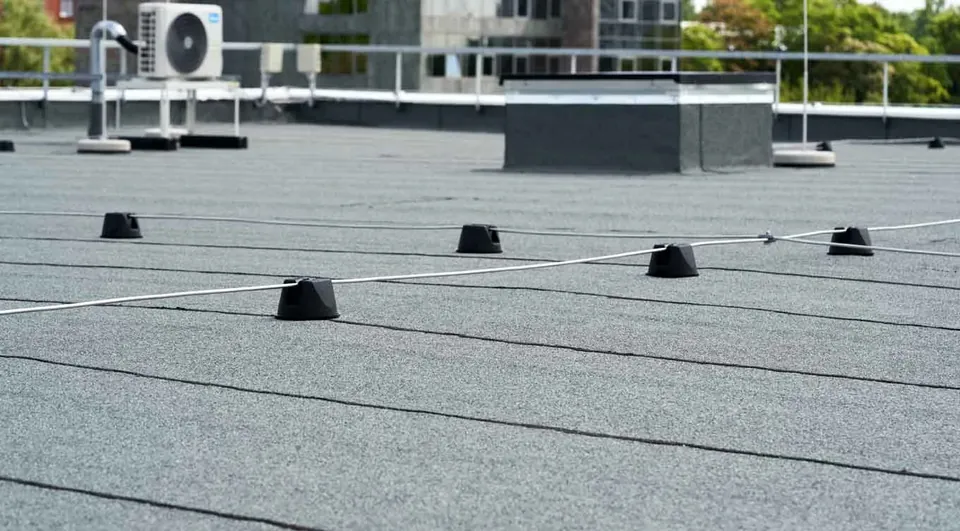
Agree on access before the visit
Ask the equipment contractor which units need attention, what will be brought onto the roof and whether parts will be removed or replaced. Identify the authorized access point and discuss the route to the equipment with the roofer. Existing designated walkways should be part of that conversation.
Ask how tools and removed panels will be handled and where temporary materials can be placed without damaging the roof or obstructing drainage. Do not improvise a protective mat or walkway from whatever is available: have the roofer confirm what is compatible with the roof system and appropriate for the work.
Document the equipment area
Have qualified personnel photograph the work area before service, including the nearby membrane and the equipment's roof connection. A dated overview helps locate the unit; close-ups help record existing concerns. Building managers do not need to climb onto the roof to create this record themselves.
Carlisle's roof maintenance guidance identifies maintenance foot traffic as a possible source of damage and calls for checking around mechanical equipment for cuts and accumulated debris. Although that article discusses seasonal maintenance, those observations are useful when planning a service visit in Florida.
Separate equipment changes from roofing changes
A routine service appointment can uncover a need for more substantial work. Before anyone changes a curb, support or roof penetration, agree on who will assess and complete the roofing portion. Ask whether the roof manufacturer or warranty provider needs to be consulted about the proposed alteration.
- Will the work disturb any flashing or membrane?
- Who will make the roofing detail watertight afterward?
- How will the area be protected if work spans more than one visit?
- Who will document completion and report unresolved concerns?
Put the answers in the work order. A vague instruction to repair anything disturbed leaves room for different expectations between trades.
Close out the visit with a roof check
Request confirmation that tools, loose fasteners and packaging have been removed. Have the work area and access route checked for new damage, and keep the completion photographs with the service record. If something looks disturbed, arrange a roof inspection before treating the visit as fully closed.
If a leak appears afterward, record the interior location and timing and contact the relevant contractors promptly. The timing is useful evidence, but it does not establish the cause by itself. Clear before-and-after records give the roofer and equipment technician a better starting point for investigating the problem.