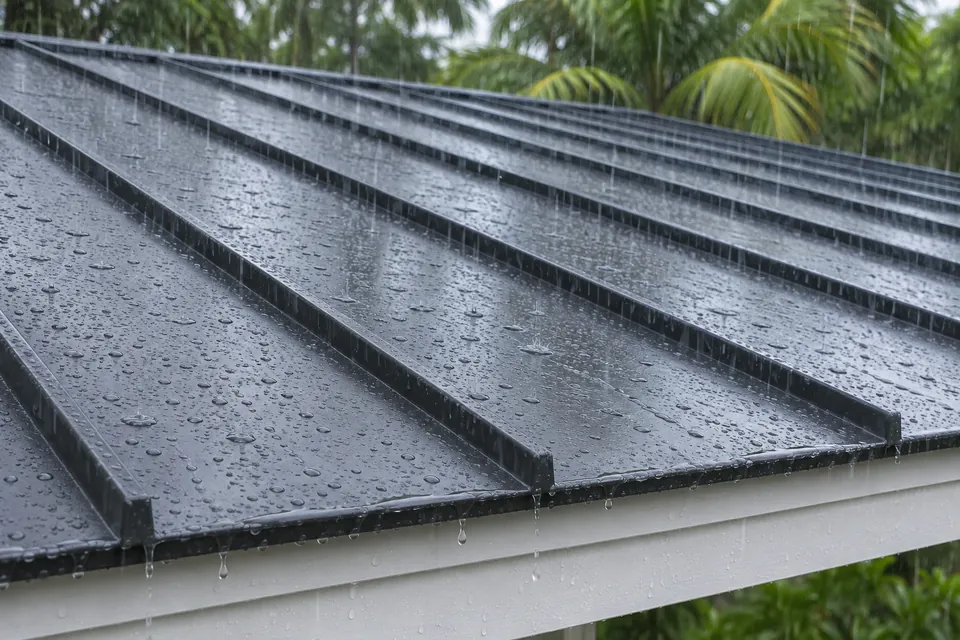
Hearing rain on an open metal porch can make a homeowner hesitate about putting metal over a bedroom. But the porch leaves out much of the construction between a residential roof and the room below. The material on top is only part of the sound question.
If you are comparing metal roofing options for a Daytona Beach home, ask the contractor to describe the proposed roof assembly before asking whether it will be quiet. A useful answer connects the panels to the decking, underlayment, attic or roof cavity, insulation and ceiling beneath them.
Compare complete assemblies
McElroy Metal's residential metal roofing guide explains why a roof over open framing can sound different from one over a finished home. Layers beneath the panels can reduce the rain sound reaching occupied rooms. That does not establish one guaranteed sound level for every house.
A room with a vaulted ceiling may have a different arrangement from a room beneath a large attic. A roof over a porch may have no enclosed space beneath it at all. Tell the roofer which room concerns you most and ask how that part of the house is constructed. A generic reassurance about metal roofs does not answer that room-specific question.
Ask what the proposal actually includes
Before agreeing to roof replacement, request a written description of the roofing system and any work proposed below it. Do not assume an estimate includes added insulation or changes inside the attic unless those items are stated.
- Will the panels be installed over solid decking, and what condition is that decking in?
- Which underlayment is specified, and why is it appropriate for the chosen system?
- What existing insulation and ceiling arrangement will remain?
- Does the contractor propose any change specifically because of your noise concern?
If a product is presented as a sound-control solution, ask for evidence that applies to the proposed assembly. A test for a different panel, support system or enclosed space may not predict your bedroom's experience. Avoid treating a single decibel figure as a promise for the finished house.
Use examples carefully
A recording on a phone can help describe a sound, but recording settings and speaker volume make it a poor comparison of two roofs. Even visiting another house during rain leaves questions about rainfall intensity, ceiling construction and room location. Ask what is comparable before drawing a conclusion.
Think about your preference as well: some people enjoy hearing rain, while others want as little sound as possible. Describe the practical concern, such as sleep in a particular room, rather than asking only whether metal is louder than shingles. This gives the contractor something specific to discuss.
Separate rain sound from a new rattle
If an existing roof develops a sudden rattle or another unfamiliar sound, report when it happens and where you hear it. Do not assume every noise is ordinary rain striking metal. A recording made safely indoors can help explain the observation, but a roof assessment is needed to identify its cause.
The decision should rest on a suitable roofing system, a clear scope and realistic expectations for your home. Neither an open-porch demonstration nor a blanket promise of silence supplies all three.