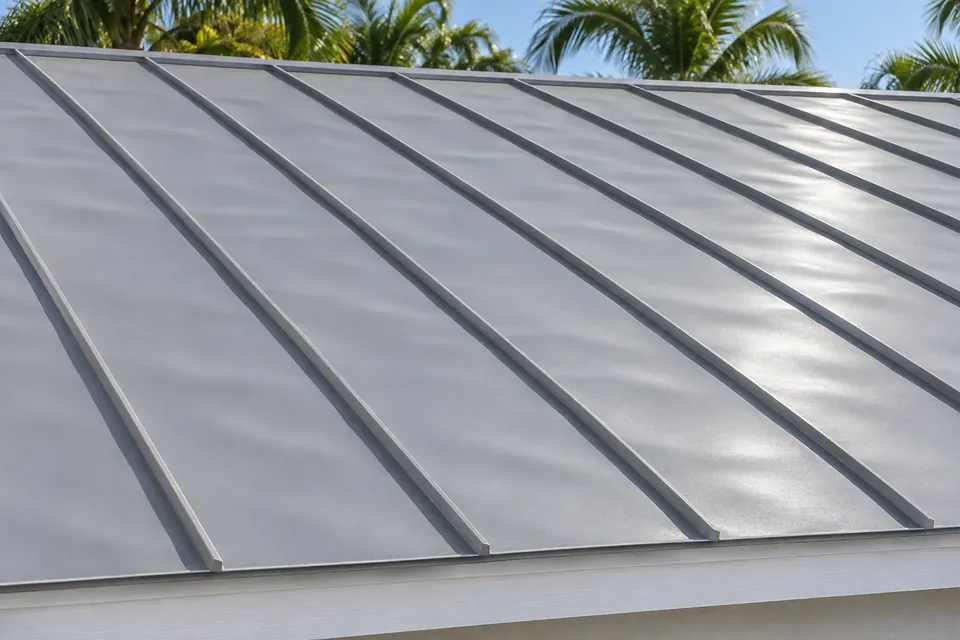
A metal roof can look smooth from one part of the yard and noticeably wavy from another. Broad reflections across the panel surface can make that change surprising. The roofing term you may hear is oil canning, but the label should come with an explanation of what was actually observed.
If you are considering metal roofing for a Daytona Beach home, discuss panel appearance before selecting the system. If your roof is already installed, take ground-level photographs and ask the roofer to assess the condition rather than assuming all waviness means the same thing.
What oil canning describes
The Metal Construction Association's oil-canning technical bulletin describes visible waviness in the flat areas of metal panels. Lighting and viewing angle can make it more or less apparent. Material selection, panel design and installation practice can reduce its tendency, but complete prevention cannot be guaranteed.
This is why two photographs of the same roof can give different impressions. When documenting a concern, keep the time of day and viewing position with the image. Take a wider view showing the roof section as well as a closer view from a safe location on the ground.
Separate an appearance question from other symptoms
Do not use the term oil canning to dismiss a leak, an open seam, an obvious impact dent or a sudden change after a storm. Those observations need their own assessment. Tell the roofer when the appearance was first noticed and whether anything else changed at the same time.
If there is a new concern on an existing roof, a roof inspection provides a way to document the affected area and distinguish an appearance finding from work that may be needed. Ask the report to state the basis for its conclusion. A photograph alone cannot verify fastening, substrate condition or concealed details.
Discuss appearance before ordering panels
Ask to see the actual profile being proposed, including whether the broad pans are flat or have small reinforcing ribs or striations. A small color chip helps select a finish but does not show the appearance of a full-length panel installed on a slope.
- What panel profile and finish are included in the proposal?
- Can you see a representative installed example or larger sample?
- What appearance variations should you expect under changing sunlight?
- How will an appearance concern be reviewed after installation?
Request answers for the specific product, rather than a general statement that one type of metal always looks better. If you visit an example, ask how its profile, finish and viewing conditions differ from your proposed roof. A shaded display and a sunlit roof do not provide the same visual comparison.
Keep the discussion documented
Save the selected profile, finish and product name with the written proposal. If you are changing a selection after seeing a sample, confirm that the updated choice appears in the scope before material is ordered. Keep any manufacturer information supplied during that conversation.
For an installed roof, ask what follow-up is recommended and whether the manufacturer should review the finding. Do not press on panels, add fasteners or try to flatten a wave yourself. An attempt to change the appearance can affect other parts of the roofing system. The useful outcome is a documented assessment and a clear next step, not a verdict based on one reflection.