Dark streaks on a shingle roof can look alarming, particularly when they become more noticeable from the street. For homeowners in Ormond Beach, the useful first question is what caused the discoloration and whether there are separate signs of roof damage.
If the staining comes with missing shingles, leaks or uncertainty about the roof's condition, start with a roof inspection before booking a cleaning treatment. Color alone is not enough to decide that the roof needs replacing.
Do not diagnose every dark mark as the same problem
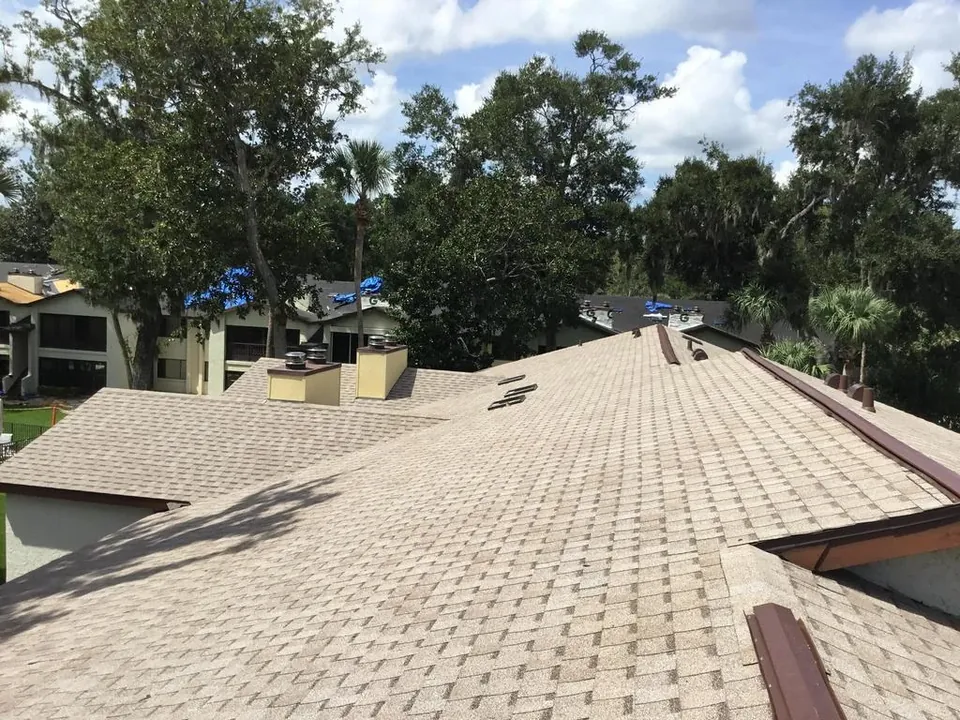
GAF's technical bulletin on shingle staining explains that dark marks are often associated with blue-green algae. Moisture and suitable temperatures support its growth. That guidance describes a common cause; it does not identify the cause of a particular stain from a distant photograph.
Photograph the affected slope from the ground and note when you first noticed the change. If you have older property photographs, compare the same area. Tell the roofing professional about recent roof work, any interior staining and whether the discoloration appears to be spreading. These observations help frame the assessment without requiring you to walk on the roof.
Separate appearance from roof condition
Ask for the findings in two parts: what appears to explain the surface discoloration, and whether the roof has defects requiring roofing work. A roof may need attention for more than one reason. Cleaning should not stand in for repairing a leak, and an attractive surface should not be treated as evidence that everything underneath is sound.
For asphalt shingle roofing, identify the manufacturer and product if the records are available. Guidance for one roof covering should not automatically be applied to another. Bring the warranty paperwork into the discussion before agreeing to a treatment.
Ask how the shingles will be protected
GAF warns against power washing shingles because it can dislodge protective granules. Before hiring a cleaning provider, ask for the proposed method in writing and how it follows the roof manufacturer's instructions. A reassuring service name is less useful than a clear description of the process.
- Who has checked that the roof is suitable for the proposed treatment?
- How will the provider protect landscaping, nearby surfaces and drainage areas?
- What access and fall-protection arrangements will the provider use?
- What result is expected, and what happens if marks remain?
Leave roof access and chemical handling to a qualified provider. This article is not a mixing recipe, and R&K's roofing assessment should not be taken as a promise to provide a separate cleaning service.
Choose the next step from the findings
If the concern is limited to appearance, discuss manufacturer-compatible care. If inspection identifies damaged roofing, ask for a repair scope. Where replacement is recommended, request the condition evidence behind it. Keeping those decisions separate helps you avoid paying for a cosmetic treatment when the real concern needs roofing work.